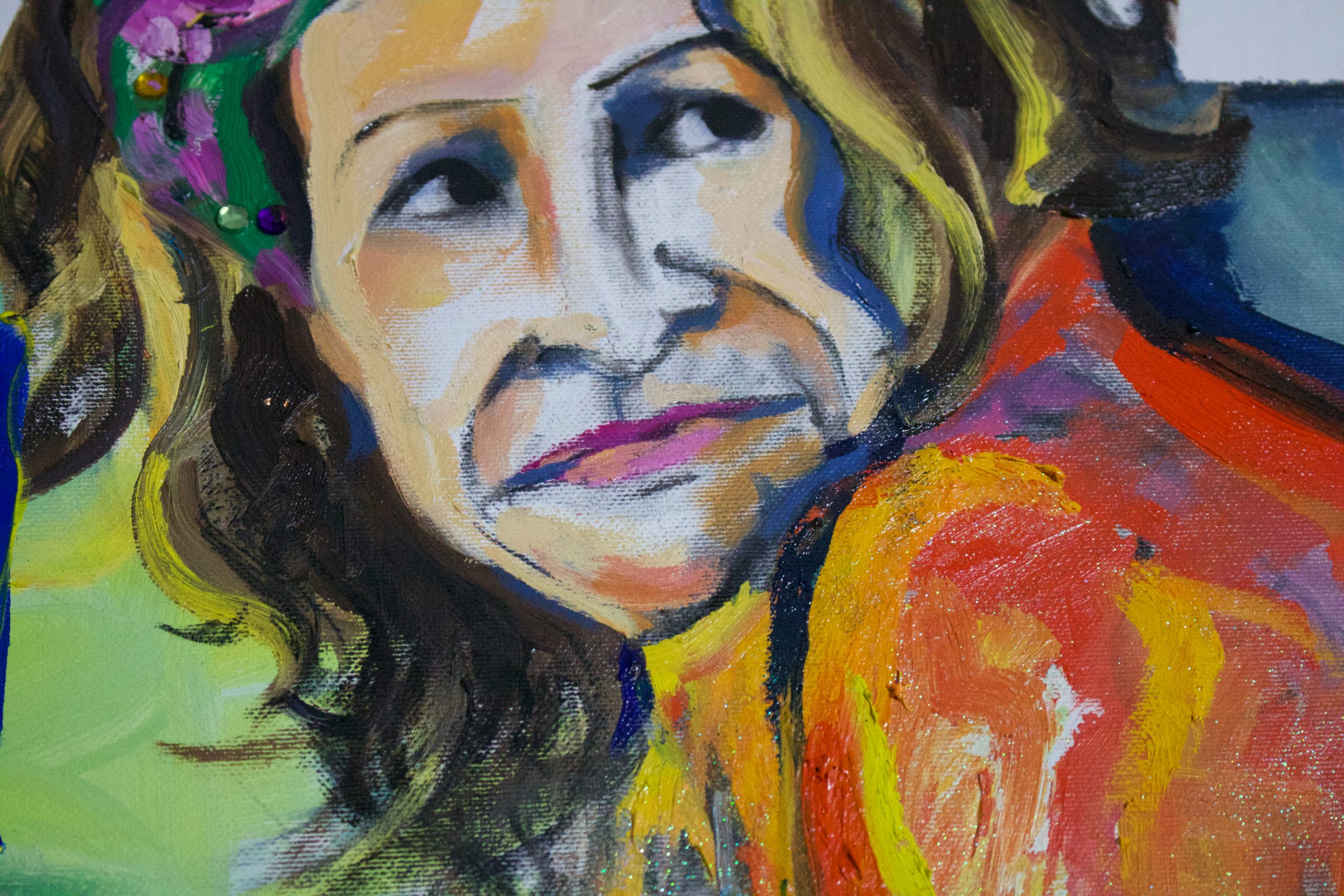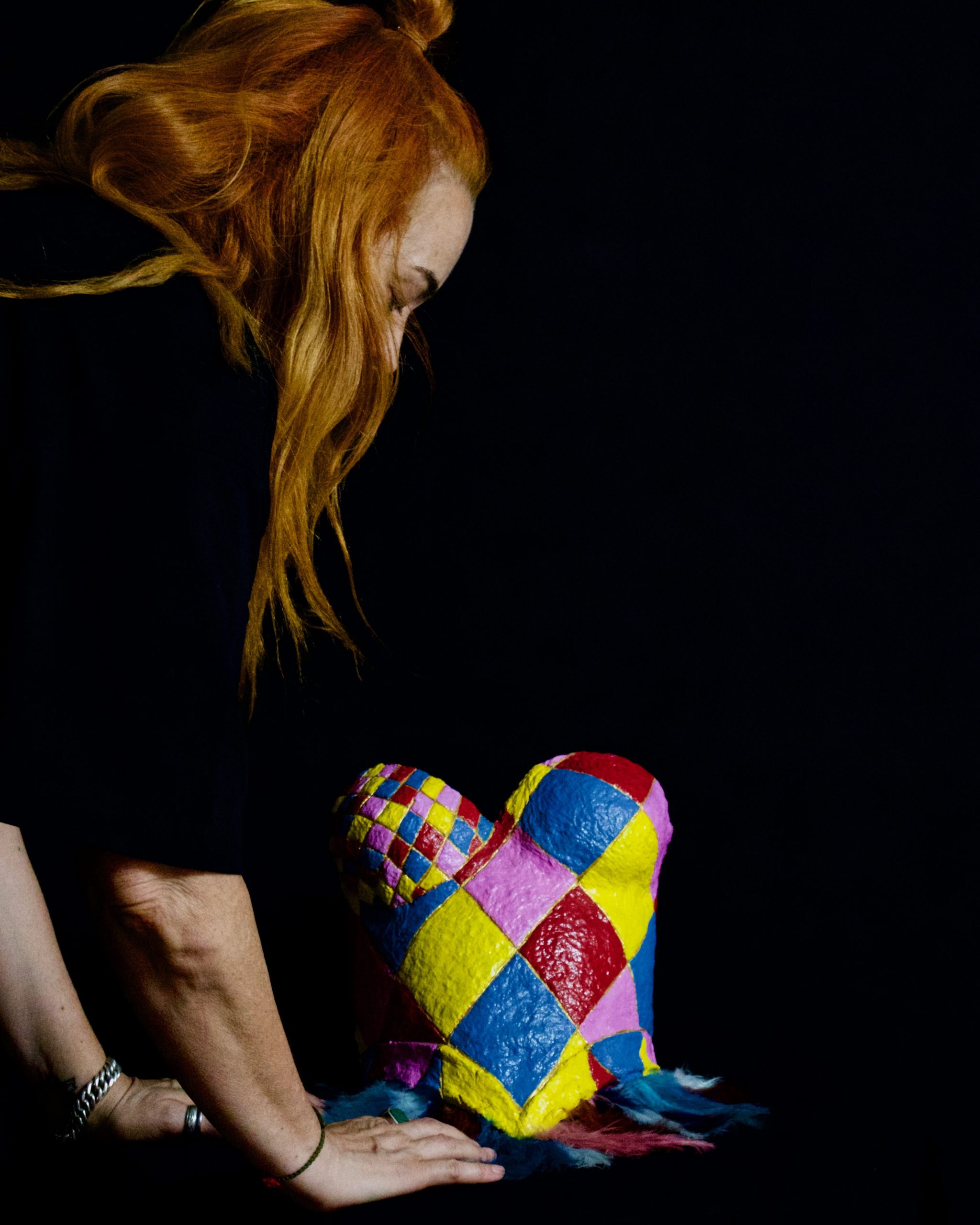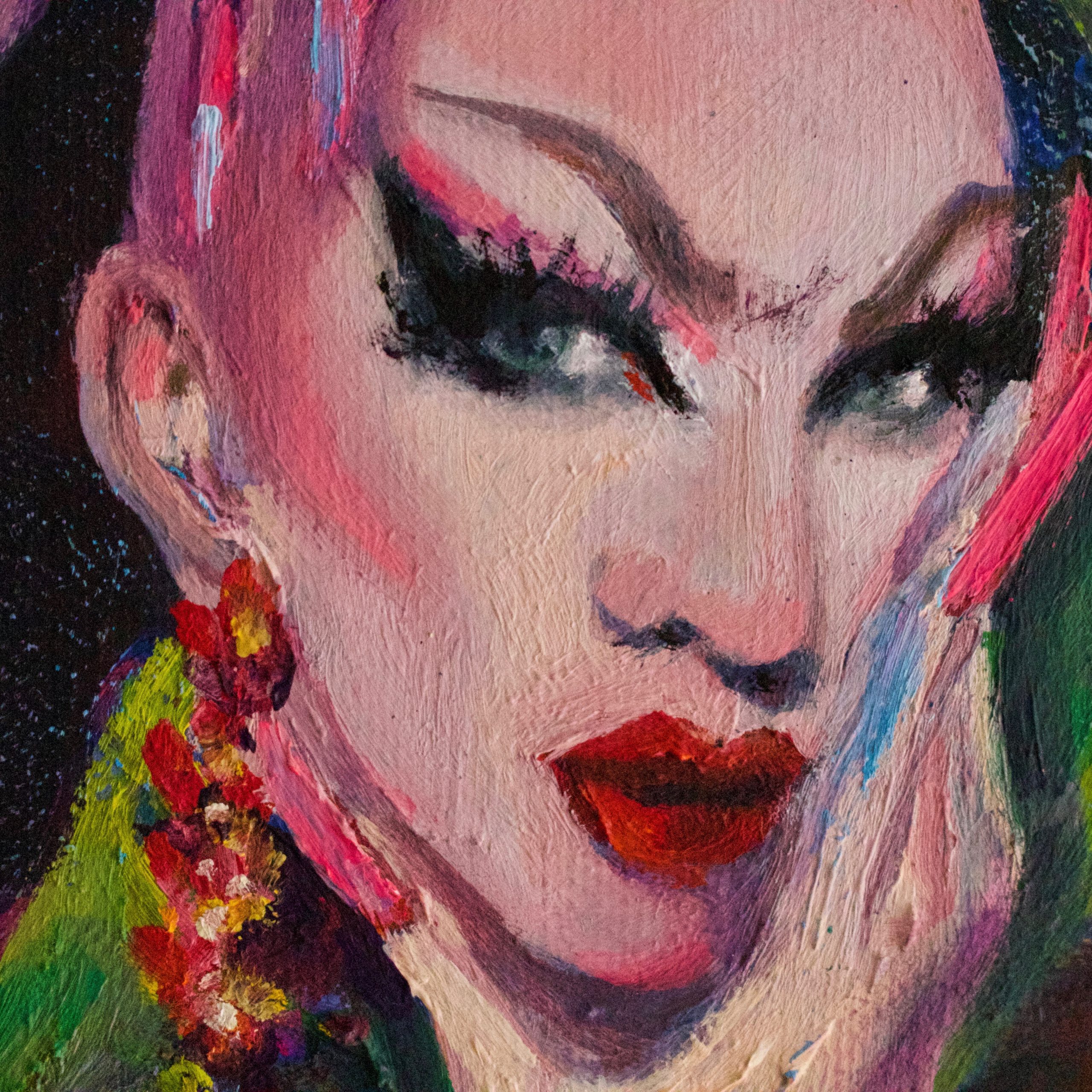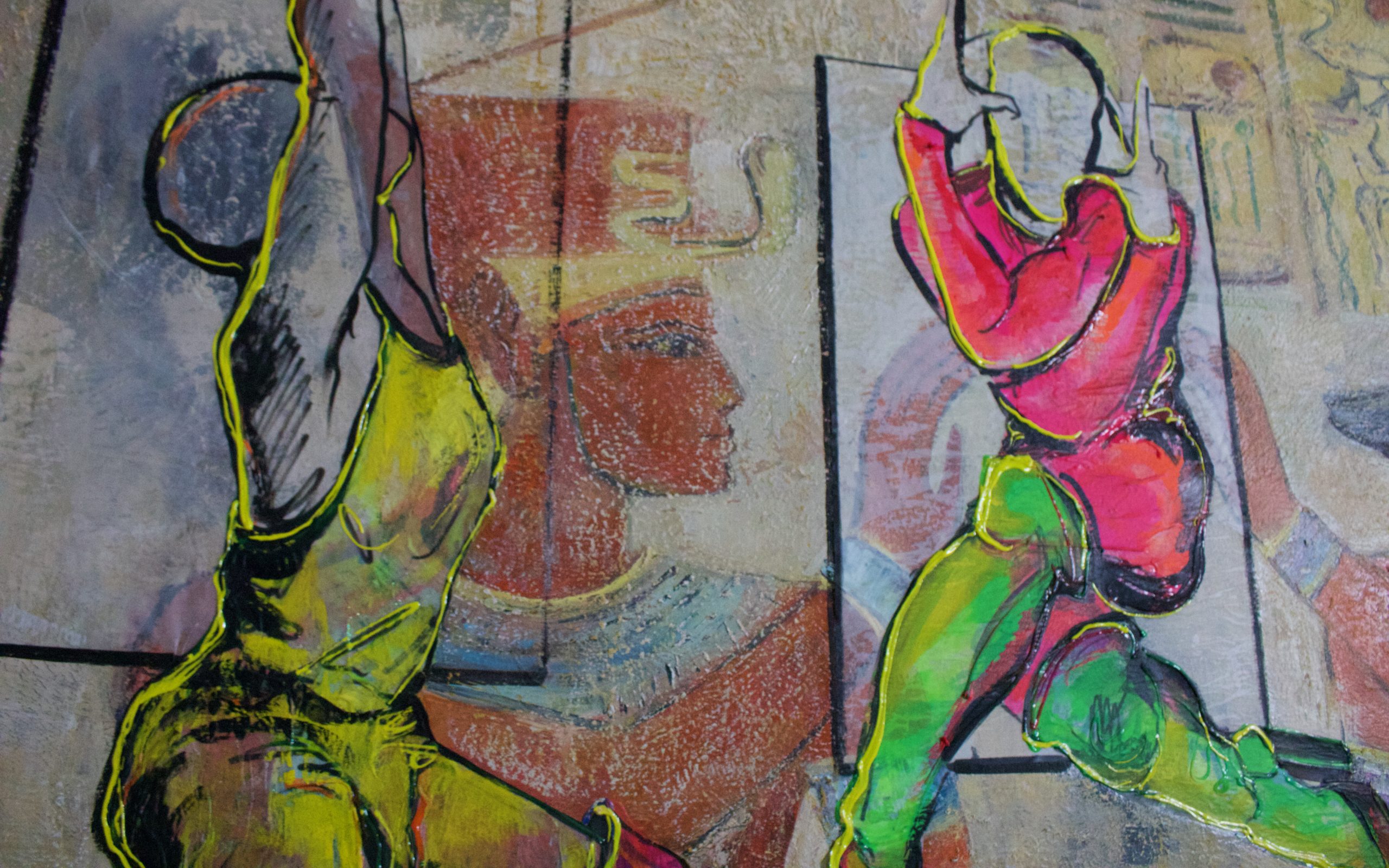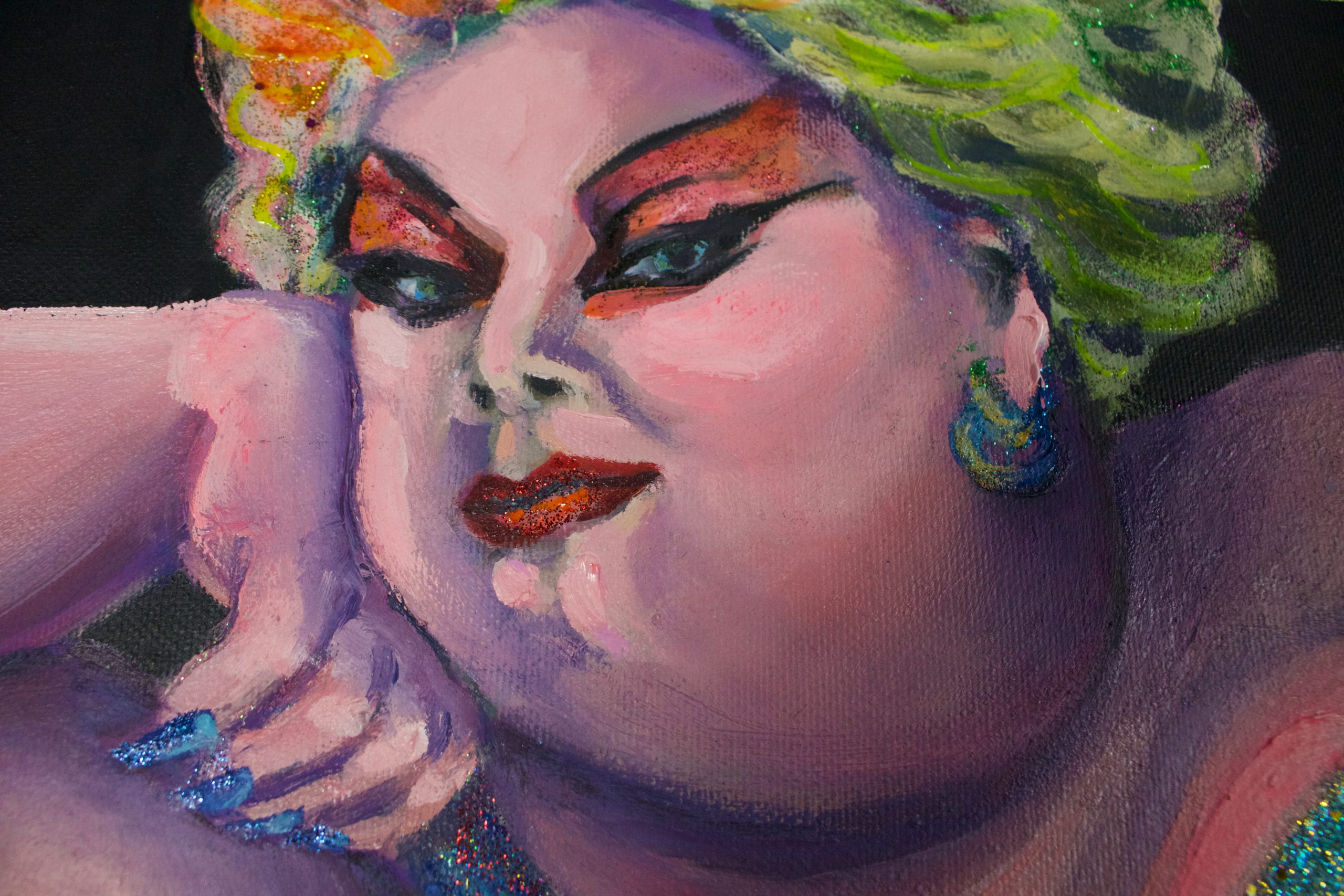


“The Tyranny of Beauty” is a satirical critique of beauty standards. The composition depicts two figures: Divine, a voluptuous woman with exaggerated hair, radiating both arrogance and serenity; and beside her, Harris, portrayed with a more fragile demeanor. The black background creates a sharp contrast with the vibrant colors of the figures and the shoe, heightening the focus on them.
The atmosphere is bizarre, even surreal, reinforcing the critique of dominance and control imposed by beauty ideals. The exaggerated makeup of Divine and the submissive expression of Harris evoke discomfort and tension, reflecting the struggle between appearance and authenticity.
Harris Glenn Milstead broke with the conventions of 1970s drag performance. As Divine, he defined Camp culture —a transgressive, flamboyant, and provocative persona. Yet Harris, the actor behind Divine, became trapped within his own creation. He dreamed of entering mainstream cinema, a pursuit that proved difficult in a world governed by prejudice and taboo.
Today, Divine remains an icon who continues to inspire the LGBTQ+ community. Though not an activist in the traditional sense, Divine’s art and presence gave immense visibility to queer identity. “The Tyranny of Beauty” pays tribute to this duality between power and vulnerability, beauty and oppression, celebrating freedom and the courage to be oneself.